

Most small business owners assume ISO 9001 certification is a cost center, not a savings tool. By the time they lose a contract to a certified competitor, the real cost of skipping certification has already hit their bottom line.
ISO 9001 certification can save your small business money by reducing rework, preventing lost contracts, and cutting the hidden costs that come with unpredictable pricing and slow turnaround.
This article breaks down where certification actually saves you money, what to look for in a provider, and how the process works from start to finish.
What ISO 9001 Certification Actually Involves
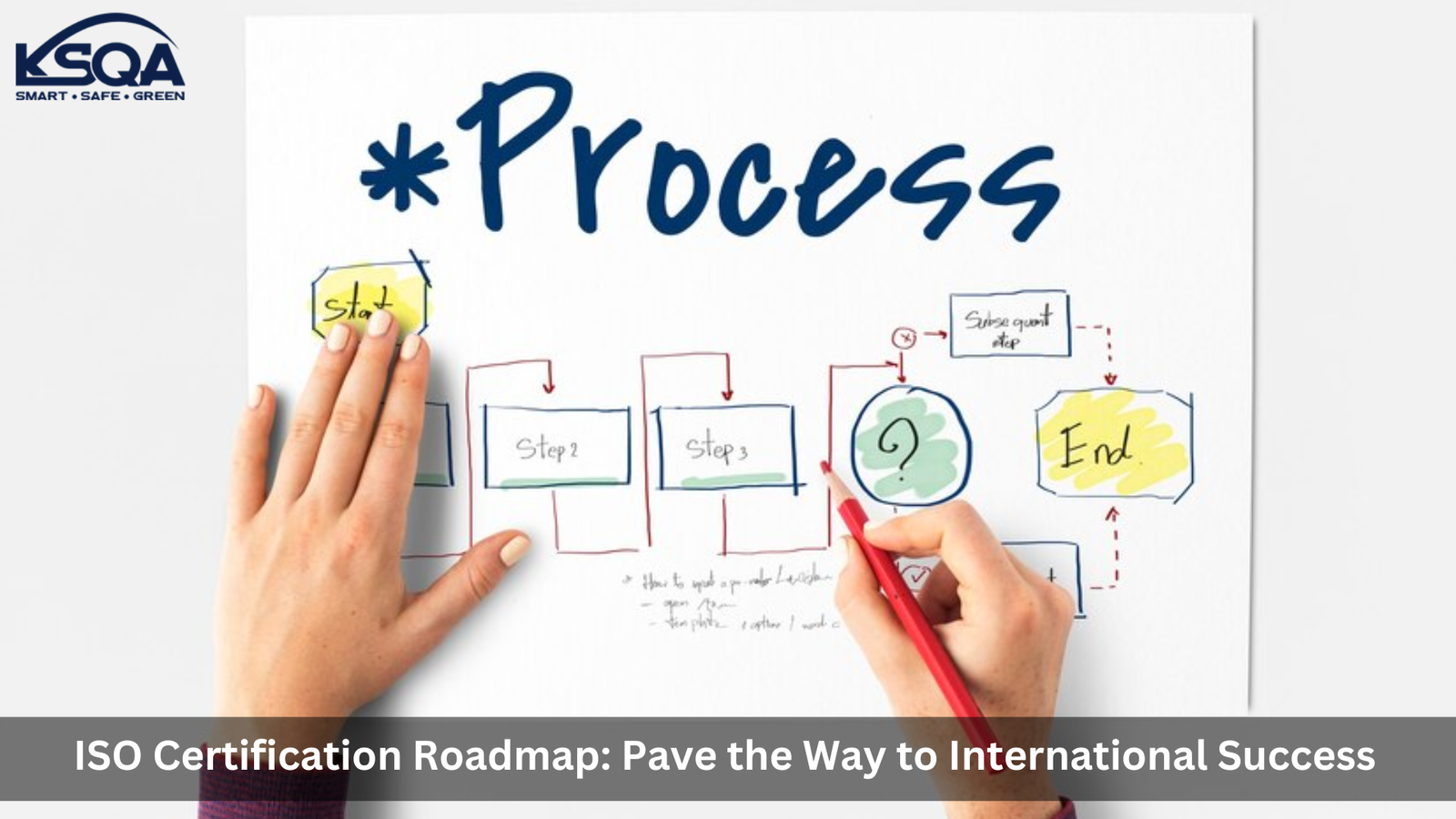
You move through four stages to get certified: a gap analysis, a documentation review called Stage 1, an implementation audit called Stage 2, and a final certification decision.
The Core Certification Process
Your process starts with a gap analysis that reviews your existing practices and flags weaknesses before the formal audit begins. Stage 1 is a virtual documentation review of your policies and procedures.
Stage 2 tests how well those procedures perform in daily operations. Once you pass both stages, you receive your certification decision, and with a fast-turnaround provider like KSQA, you get your certificate within 2 to 3 days of successful completion.
Where the Real Savings Come From
Most articles list "cost savings" as a vague benefit without explaining how the money is actually saved. Your savings come from three specific points in the process.
First, the gap analysis catches process failures before they become expensive mistakes on the audit floor, so you fix problems once instead of paying for a failed Stage 2 audit and repeating it.
Second, a fixed-price model removes the scope-creep risk that inflates costs mid-process when a certification body discovers "additional requirements" halfway through.
Third, a fast certification turnaround shortens the window where you sit locked out of certified-only contracts, and every week you wait is a week of lost bidding opportunities.
“The GSA OASIS Plus Small Business Contract explicitly lists ISO 9001:2015 certification as a quality management system requirement for supplier eligibility,” which means the cost of skipping certification shows up as contracts you cannot even bid on.
What to Look for in an ISO 9001 Certification Provider
Not every certification body delivers savings the same way. The provider you choose determines whether certification becomes a cost-efficient investment or an unpredictable expense.
1. Fixed, Transparent Pricing
Choose a provider that quotes a fixed price upfront to protect your budget from hidden fees. KSQA runs on a fixed-price model with no hidden fees, so you know your full cost before you commit.
2. Virtual-First Audit Delivery
Travel costs and on-site scheduling add real expense to certification. Virtual-first audits save you time and cut these costs directly, since your team never has to accommodate an auditor's travel schedule.
3. Accreditation That Holds Up Under Scrutiny
Your certification only carries as much weight as the accreditation behind it. KSQA holds IAS accreditation, specifically the IAS Management Systems Certification Body accreditation (MSCB-207), which places your certificate under the IAF Multilateral Recognition Arrangement.
This matters for your bottom line: “the Federal Acquisition Regulation, Subpart 46.2, lists ISO 9001 among the higher-level quality standards federal buyers recognize for contract quality requirements.”
So accreditation credibility determines whether your certification actually opens the doors it promises.
How KSQA Approaches ISO 9001 Certification
KSQA runs your certification virtually by default, moving from gap analysis through Stage 1 and Stage 2 audits before issuing a certification decision within 2 to 3 days of successful completion.
In-person audits remain available if you need them, but the virtual-first model stays the default path built to reduce your cost and turnaround time.
KSQA holds IAS Management Systems Certification Body accreditation (MSCB-207) and IAS Aerospace Standard Accreditation (ASA-101), both active credentials displayed on the KSQA About Us page.
These accreditations place KSQA within the IAF Multilateral Recognition Arrangement, which matters when your certification needs recognition from buyers who reference federal quality standards such as those cited in the GSA OASIS Small Business 8(a) Pool Contract.
Which specifies ISO 9001 certification requirements for a quality management system to demonstrate a contractor's ability to consistently meet customer requirements.
Beyond accreditation, KSQA brings more than 20 years of experience and has completed hundreds of successful certifications, giving you a track record to weigh against newer or unaccredited alternatives.
Frequently Asked Questions (FAQs)
Q1. Does ISO 9001 certification really save small businesses money?
Yes. ISO 9001 certification saves you money primarily by reducing process failures that lead to rework and by opening access to certified-only contracts you would otherwise miss.
Your savings grow when the certification body itself uses fixed pricing and fast turnaround, since both remove unpredictable costs from your process.
Q2. How much does ISO 9001 certification cost for a small business?
Your certification cost depends on the provider's pricing model, audit scope, and business size. A fixed-price model, like the one KSQA uses, removes the uncertainty that comes with hourly billing or scope-based fee increases mid-process.
Q3. Is ISO 9001 required to win federal contracts?
ISO 9001 is not universally mandatory, but it appears as a recognized higher-level quality standard in federal contract vehicles, including GSA OASIS Plus, it demonstrates your ability to consistently meet customer requirements.
Q4. How long does it take to get ISO 9001 certified?
Your certification decision can take as little as 2 to 3 days after you successfully complete Stage 1 and Stage 2 audits with a fast-turnaround provider like KSQA, compared to an industry standard of 30 to 45 days with many traditional certification bodies.
Get Certified Without the Guesswork
So yes, ISO 9001 certification can save your small business money when your certification body removes cost uncertainty from the process.
Fixed pricing, virtual-first audits, and fast turnaround are not add-on benefits; they are the mechanism that turns your certification into a savings driver instead of a budget risk.
If you are losing contracts or bids because you lack ISO 9001 certification, the cost of waiting already outweighs the cost of getting certified.
Request a proposal from KSQA to see your fixed price and timeline before you commit to anything.
.jpg)


.jpg)
.png)